
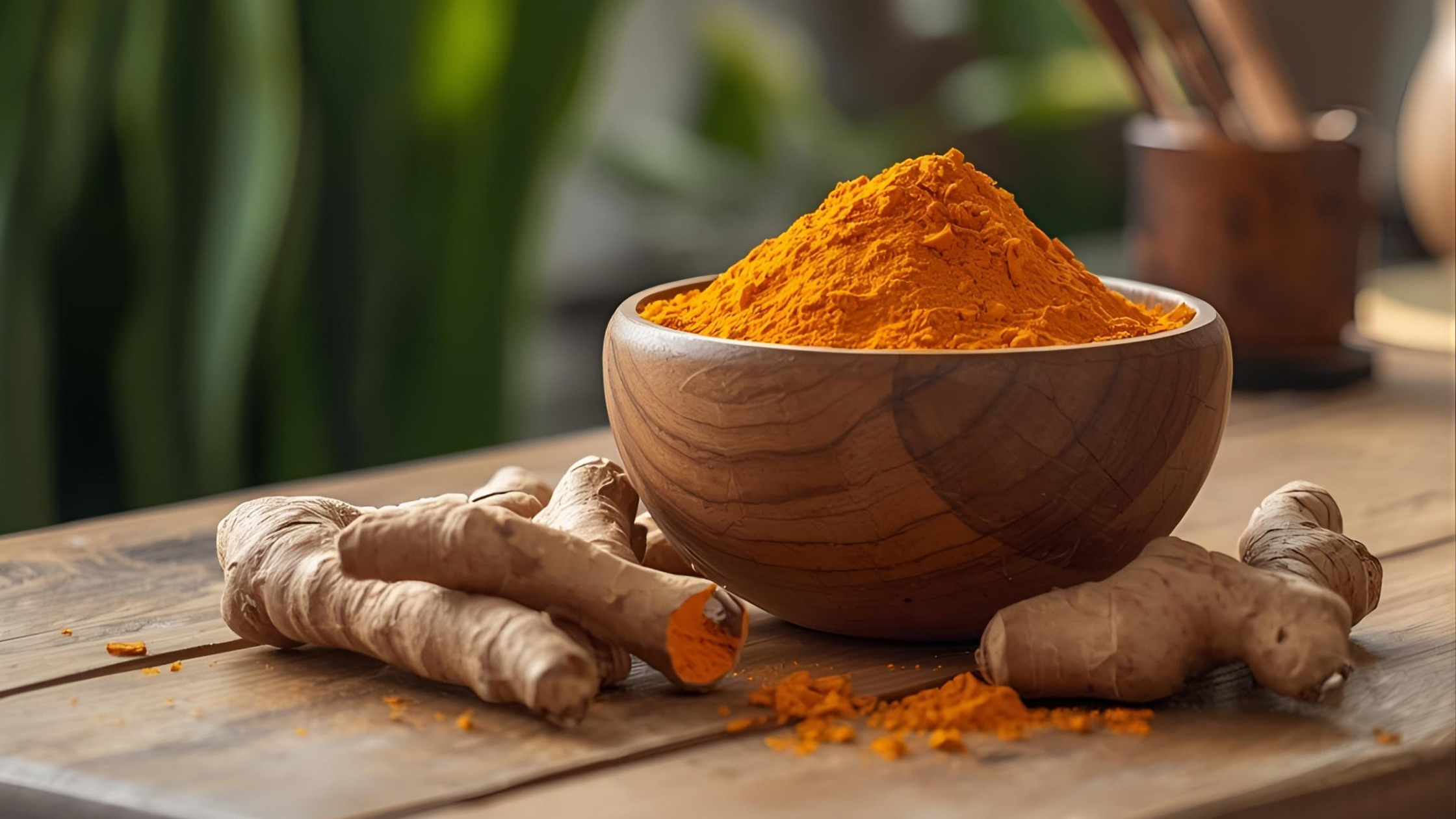
Turmeric has taken center stage in the world of natural wellness, and if you’ve seen its bright golden color in juices, shots, tonics, or supplements, you already know it’s not your average root. For thousands of years, turmeric has been a healing staple across cultures, and today it remains one of the most researched natural anti-inflammatory ingredients ever studied.
Drinking turmeric juice — especially when combined with black pepper, ginger, and a healthy oil — is one of the most effective ways to unlock its benefits. Whether you’re a wellness enthusiast, a cold-pressed juice lover, or someone looking for everyday immune, joint, or digestive support, turmeric juice offers powerful results when used correctly.
In this long-form guide, we’ll explore exactly what turmeric is, how it grows, its active compounds, why certain ingredients boost its absorption, how much to drink, how much is too much, and how you can make a potent turmeric shot at home.
What Is Turmeric? How It Grows, Where It Originated, and Who Discovered It
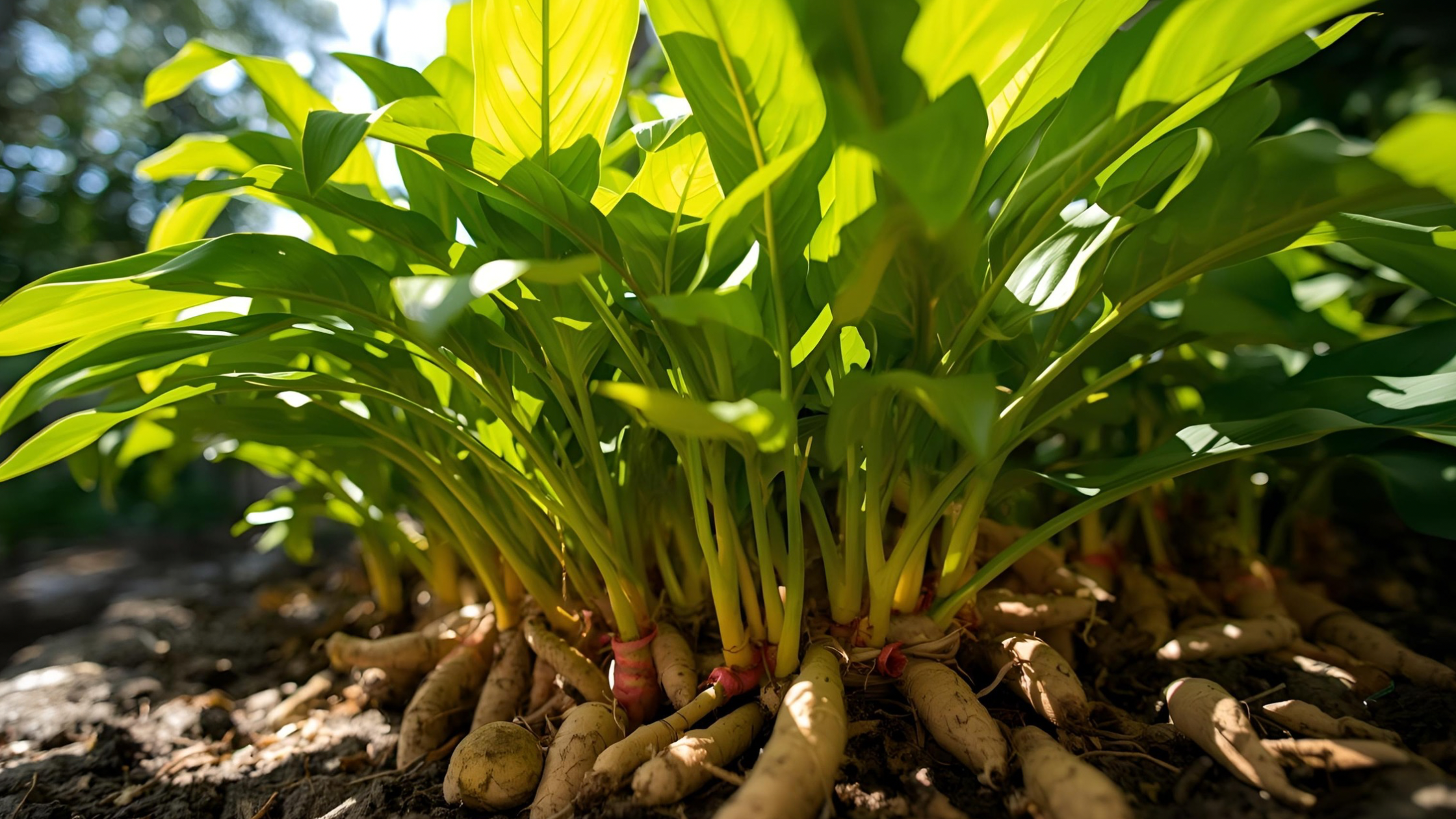
Turmeric (Curcuma longa) is a vibrant golden-orange rhizome belonging to the same botanical family as ginger. If you’ve ever held raw turmeric in your hands, you know it looks almost identical to ginger on the outside — but inside, it bursts with a deeply pigmented color that stains everything it touches, including your clothes and cutting boards.
Where Turmeric Grows
Turmeric thrives in:
- Warm, humid, tropical climates
- Loamy or sandy, well-drained soils
- Regions with consistent rainfall and temperatures above 70°F
It grows naturally throughout:
- India (largest producer in the world)
- Southeast Asia
- Sri Lanka
- Indonesia
- Southern China
In the U.S., turmeric is now grown domestically in states like:
- Hawaii
- Florida (particularly South Florida due to climate)
- Southern California

A 4,000-Year-Old Medicinal Root
The earliest documented use of turmeric dates back over 4,000 years. It was first recorded in Ayurvedic medicine, one of the world’s oldest holistic healing systems originating in ancient India. Turmeric was used in traditional formulas to:
- Purify the blood
- Ease digestive discomfort
- Boost immunity
- Soothe joints
- Support the liver
Its popularity later spread to Traditional Chinese Medicine, where it was used to move “qi” (energy), support circulation, and ease stagnation in the body.
Turmeric then traveled across trade routes to the Middle East and Europe, ultimately becoming a staple in both culinary and medicinal traditions around the world.
Today, turmeric continues to be studied extensively — with thousands of scientific papers published on its health-supporting properties.
What Is the Main Active Compound in Turmeric — and Why Is It So Good for You?
The compound responsible for turmeric’s golden color and powerful health benefits is curcumin.
Curcumin belongs to a family of compounds known as curcuminoids, which are natural polyphenols with antioxidant and anti-inflammatory properties.
Curcumin Benefits at a Glance

Scientific studies highlight curcumin’s ability to:
✔ Reduce Inflammation
Chronic inflammation is a root factor in many modern diseases. Curcumin helps lower inflammatory markers and soothe inflammation throughout the body.
✔ Provide Strong Antioxidants
Curcumin neutralizes free radicals and protects cells from damage, supporting the skin, organs, and cellular health.
✔ Support Joint and Muscle Recovery
Athletes, gym-goers, and individuals with arthritis often notice less stiffness and faster recovery.
✔ Boost Immune Function
Turmeric helps support the body’s natural defense system, especially combined with ginger.
✔ Aid Digestion and Gut Health
Turmeric stimulates bile flow and helps maintain a healthy microbiome.
✔ Support Brain Health
Emerging research suggests curcumin may elevate BDNF (Brain-Derived Neurotrophic Factor), linked to improved cognitive function and mood.
✔ Promote Heart Health
Curcumin may support healthy cholesterol levels and improve endothelial function (the lining of blood vessels).
However — and this is key — curcumin has low bioavailability on its own. In other words, your body absorbs only a small portion unless you combine it with specific ingredients.
That’s where black pepper, ginger, and oil come in.
Why Mixing Turmeric with Black Pepper, Ginger, and a Healthy Oil Makes It More Potent

One of the biggest mistakes people make is consuming turmeric alone. It’s healthy, but you miss out on most of the benefits without the right absorption boosters.
Black Pepper: The Turmeric Multiplier
Black pepper contains a compound called piperine, which increases curcumin absorption by up to 2,000%.
Piperine works by:
- Slowing down the metabolism of curcumin
- Enhancing digestive absorption
- Helping curcumin stay active longer in the bloodstream
Without black pepper, curcumin passes through the digestive system almost unused.
Ginger: A Natural Synergistic Partner
Ginger contains gingerols and shogaols — anti-inflammatory compounds that pair exceptionally well with curcumin.
Together they help:
- Support digestion
- Reduce inflammation
- Improve gut absorption
- Boost immune strength
This is why so many wellness shots include a turmeric-ginger combo.
Healthy Oil (MCT, Flax, or Coconut)
Curcumin is fat-soluble, meaning it absorbs best when paired with a healthy fat. A few drops of oil dramatically increase its transport into the bloodstream.
Great options include:
- MCT oil (best for rapid absorption)
- Flax oil (adds omega-3 fatty acids)
- Coconut oil (mild flavor and easy to find)
The combination of turmeric + black pepper + ginger + oil turns a basic juice into a potent anti-inflammatory powerhouse.

How Much Turmeric Juice Should You Drink — and How Often?
Because fresh turmeric is so potent, you don’t need much.
General Recommendation
For most adults, 1–2 ounces of concentrated turmeric juice per day is enough to see benefits.
If You’re New to Turmeric
Start with:
- 1 ounce per day for your first week
Then increase gradually to see what works for your body.
If You’re Active or Recovering
Athletes, gym-goers, or individuals dealing with inflammation may benefit from:
- 2 ounces daily, split into morning and afternoon shots
Consistency Is Key
Turmeric works best when taken daily, not sporadically. Its anti-inflammatory effects build up in the body over time.
Is It Possible to Drink Too Much Turmeric? What to Watch Out For

Yes — while turmeric is natural and healthy, too much of a good thing can cause issues.
Most problems come from very high doses or concentrated extracts, but fresh juice should still be used thoughtfully.
Potential Side Effects of Excess Turmeric
Stomach upset
Turmeric can stimulate gastric juices, which may cause discomfort or cramping if over-consumed.
Nausea
Especially when consumed on an empty stomach.
Increased risk of bleeding
Curcumin naturally thins the blood, so high doses may not be suitable for individuals on blood thinners.
Gallbladder issues
People with gallstones or bile duct obstruction should avoid high doses.
Lowered blood pressure
Beneficial for many — but too much may drop levels too low in sensitive individuals.
Safe Limits
Most experts recommend:
- No more than 2 ounces of concentrated turmeric juice per day
- No more than 4 grams of turmeric powder per day
- No more than 1,500 mg of curcumin supplements per day unless guided by a doctor
Who Should Consult a Practitioner First
- Anyone on blood thinners
- Pregnant individuals
- Those with gallbladder disease
- Individuals scheduled for surgery
For most healthy adults, turmeric juice is incredibly safe — just use it in reasonable amounts.
Final Summary: Why Turmeric Juice Deserves a Place in Your Daily Routine
Turmeric is one of nature’s most powerful anti-inflammatory plants, backed by thousands of years of traditional use and modern scientific research. Whether you juice it fresh, take it as a shot, or add it to smoothies, turmeric supports:

- Lower inflammation
- Better digestion
- Faster muscle and joint recovery
- Stronger immunity
- Improved antioxidant protection
- Healthier skin and aging support
And when combined with black pepper, ginger, and a healthy oil, the absorption and effectiveness of turmeric increase dramatically.
Adding turmeric juice to your daily routine is an easy, natural, and affordable way to feel better from the inside out — as long as you consume it mindfully.
Simple At-Home Turmeric Juice Recipe (No Scale Required)
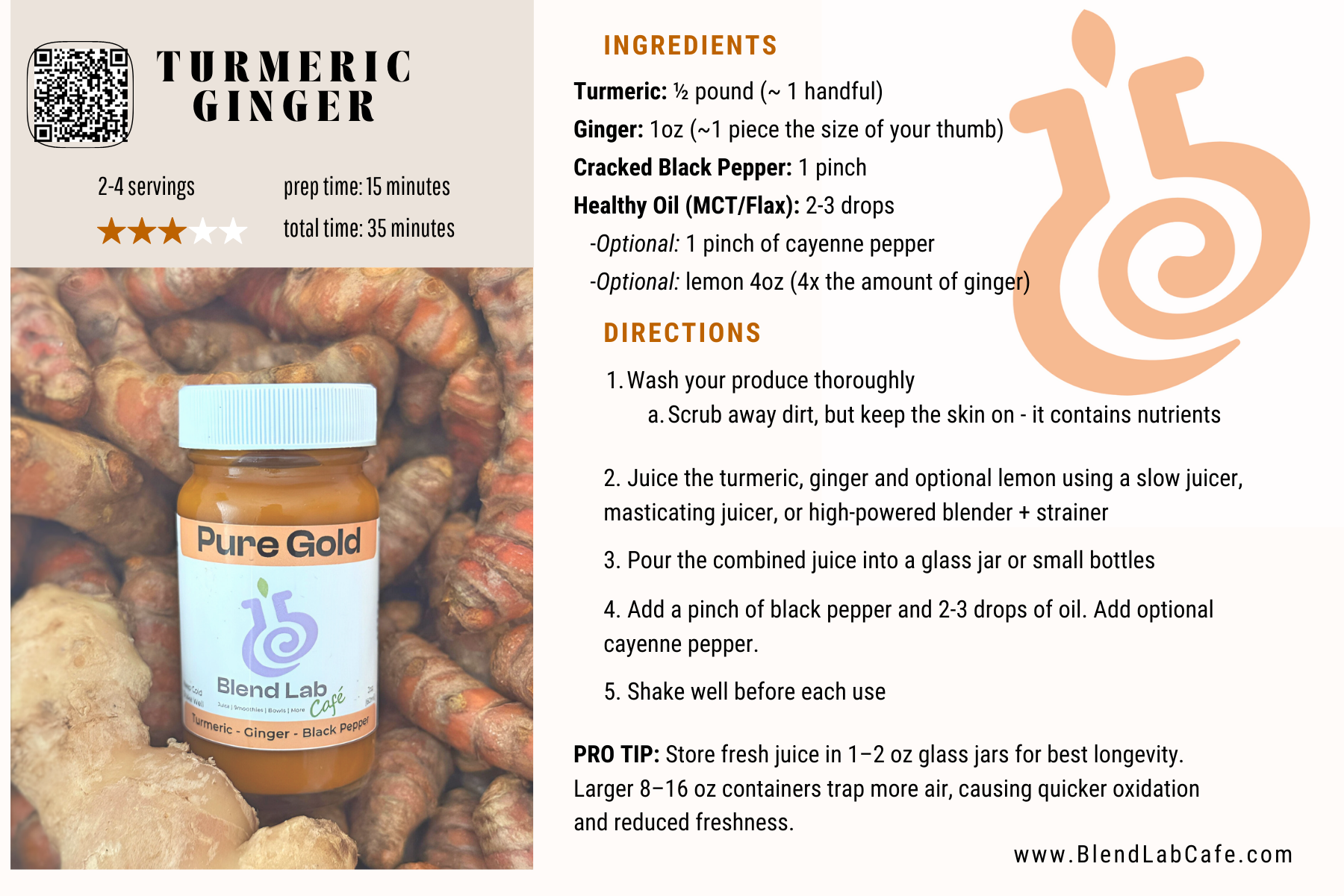
This recipe is adapted from the same ratio we use at Blend Lab Café for our Pure Gold Shot. It provides a powerful concentration of curcumin, gingerols, and piperine — with easy household measurements.
You don’t need a scale; just use simple “handful” ratios.
Ingredients
If you don’t have a scale:
- Makes: 3-4oz
- Fresh turmeric root: 1 Handful
- Fresh ginger root: 1 piece about the size of your thumb
- Pinch of black pepper
- 2–3 drops of a healthy oil such as the following:
✔ MCT oil
✔ Flax oil
✔ Coconut oil
If you have a scale at home:
- Makes: 3-4oz
- Fresh turmeric root: 8oz by weight
- Fresh ginger root: 0.8oz by weight
- Pinch of black pepper
- 2–3 drops of a healthy oil such as the following:
✔ MCT oil
✔ Flax oil
✔ Coconut oil
PRO TIP:
Play with the ginger to taste! Spice it up with a little extra ginger or give it a kick with a pinch of cayenne pepper. Like it a little more tart? Add some lemon (4x the ginger by weight/size)
Instructions
- Wash your turmeric and ginger thoroughly.
Scrub away dirt, but keep the skin on — it contains nutrients. - Juice all ingredients using a slow juicer, masticating juicer, or high-powered blender + strainer.
- Pour the combined juice into a glass jar or small bottles.
- Add a pinch of black pepper and 2–3 drops of oil.
- Shake well before each use.
How to Use It
- Drink 1–2 oz daily (like a wellness shot).
- Add to smoothies or fresh cold-pressed juice.
- Mix into warm tea (not boiling — high heat destroys curcumin).
Storage
- Refrigerated: 3–5 days
- Frozen in small portions: Up to 3 months
PRO TIP:
If storing fresh in the fridge, its best to store in individual glass 1-2oz jars. If storing in a larger 8-16oz glass container the ambient air in the jar will cause the juice to oxidize sooner and reduce freshness.
If freezing, use silicone ice molds or small glass bottles for easy thaw-and-sip convenience.